
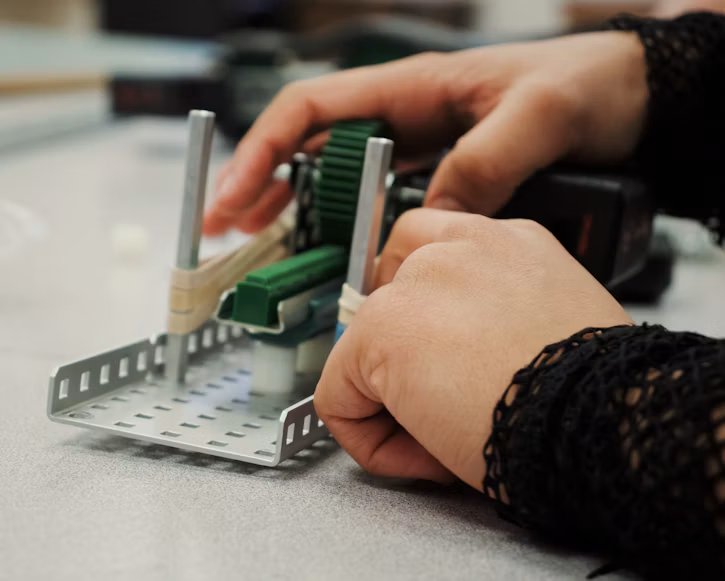
The FIRST Robotics Competition (FRC) challenges students to design, build, and program robots capable of completing complex tasks. Success requires more than creativity and teamwork; it also depends on selecting the right components.
From motors and control systems to mechanical structures and electrical hardware, every part contributes to a robot’s performance, reliability, and safety. Choosing suitable FRC parts helps teams build efficient robots, overcome engineering challenges, and compete with confidence.
1. Build a Strong and Reliable Robot Structure
A robot needs a durable frame that can withstand impacts, movement, and repeated competition use. Structural components such as aluminum extrusion, brackets, plates, fasteners, and support members help create a stable foundation.
High-quality structural first robotics competition parts allow teams to build lightweight yet strong robots. They also make it easier to modify designs, replace damaged components, and accommodate new mechanisms during the build season.
2. Improve Movement With Motors and Drivetrain Components
Movement is one of the most important aspects of an FRC robot. Motors, gearboxes, wheels, sprockets, belts, chains, and bearings work together to provide controlled movement and maneuverability.
Selecting appropriate drivetrain components helps teams improve acceleration, turning, traction, and overall performance. Reliable motors and properly matched gear ratios also allow robots to handle different field conditions and game challenges.
3. Ensure Accurate Control With Electrical and Electronic Parts
Electrical components are essential for making a robot function correctly. Motor controllers, sensors, wiring, connectors, batteries, and power distribution equipment allow different systems to communicate and operate together.
Sensors can help robots detect objects, measure distances, and understand their position. Reliable electrical connections reduce the chances of unexpected failures during matches. Choosing compatible components also makes troubleshooting and maintenance easier for student engineering teams.
4. Create Effective Mechanisms for Completing Competition Tasks
Every FRC game introduces unique challenges, requiring teams to develop specialized robot mechanisms. Intake systems, elevators, arms, claws, shooters, and conveyors help robots interact with game elements and complete assigned tasks.
The right mechanical parts make these systems more efficient and dependable. Bearings, gears, pulleys, belts, and linear motion components can improve movement accuracy and reduce friction.
Teams should select mechanisms based on the competition’s objectives rather than adding unnecessary complexity. A well-designed, reliable mechanism can often perform better than a complicated system that is difficult to maintain.
5. Save Time, Improve Safety, and Simplify Maintenance
FRC build seasons involve strict deadlines, so having the necessary parts available can make a significant difference. Using compatible, reliable components reduces unnecessary modifications and helps teams focus on design improvements.
Properly selected parts also support robot safety. Secure fasteners, appropriate electrical protection, reliable wiring, and correctly installed mechanical components help prevent failures that could damage equipment or create hazards.
Keeping spare components such as belts, connectors, fasteners, and commonly used mechanical parts can also help teams complete repairs quickly during competitions.
By investing time in selecting compatible, reliable parts, teams can improve robot performance, simplify maintenance, and make better use of their build-season resources. Ultimately, the right components help turn innovative engineering ideas into successful competition robots.
